


Repairing Water Pipes Beneath Buildings Without Digging Up Floors
Updated: 2 days ago
Last Updated: November 8, 2026
Quick Summary
Repairing water pipes beneath buildings starts with locating the leak rather than digging, using acoustic detection, tracer gas testing and pressure testing to pinpoint the fault. Once confirmed, trenchless methods such as moling, pipe bursting or relining fix the pipe with minimal digging, and pressure testing afterwards confirms the leak is sealed.
Turn off the stopcock fully, open all cold taps and switch off the boiler before any repair begins.
The homeowner usually owns the pipe from the boundary stop valve to the building.
Moling generally suits a straight path from boundary to building.
Checks for buried gas, electric and telecom lines are essential before any excavation.
External Moling Services Ltd offers a 10-year labour guarantee on water main replacements and repairs.
Leak under your floor? Don't dig yet.
We find and fix buried water pipe leaks with trenchless moling, 24/7.
Table of Contents
How Water Pipe Leaks Beneath Buildings Are Found and Confirmed
Repairing water pipes beneath buildings starts with finding the leak, not digging. Locating the fault first helps keep any repair small and targeted. Water pipe leak detection pinpoints a buried pipe leak without excavation, using sound, gas and pressure tests to confirm the exact spot. When sound, gas and pressure tests point to a leak beneath a slab, DeWolfe’s Affordable Plumbing can help clarify how to detect its precise location before choosing a targeted repair.
A damp patch or a jump in your water bill usually means a leak under the slab, but guessing the location wastes money. A proper survey can narrow the leak's position considerably. Before booking detection, it helps to understand what a water pipe survey costs.
The main detection methods are:
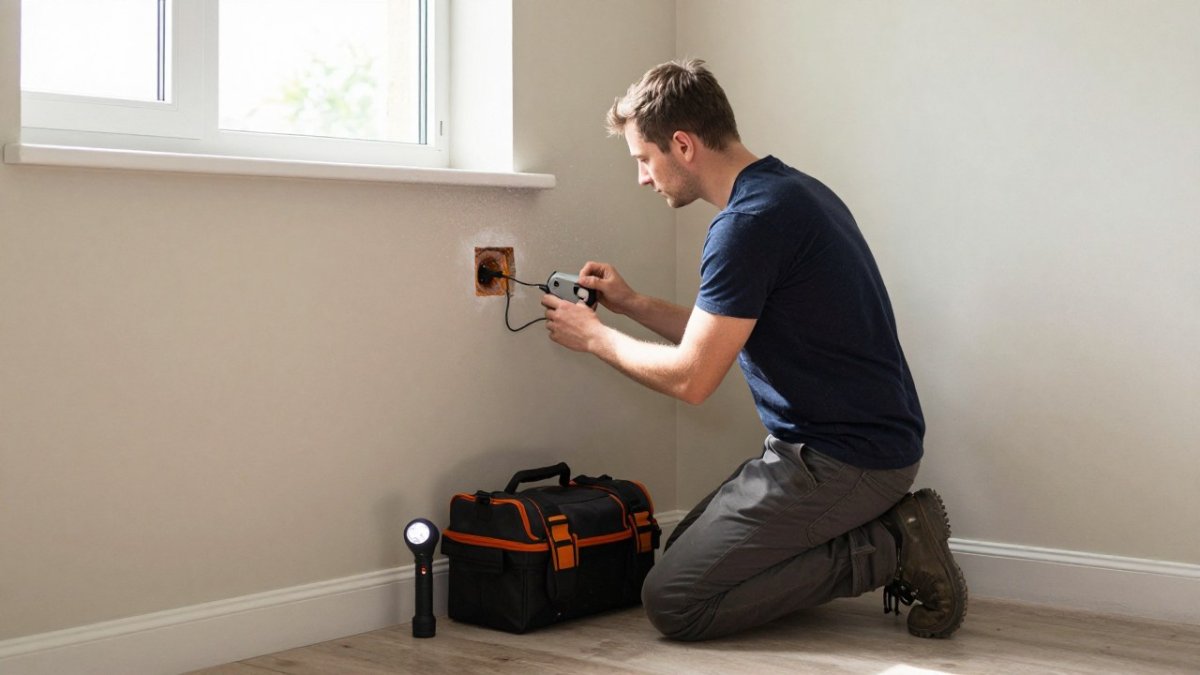
Acoustic detection: sensitive microphones listen for the hiss of escaping water.
Tracer gas testing: a safe gas mix is fed into the pipe and tracked above ground.
Pressure testing: isolating sections shows which run is losing water.
Acoustic Detection and Tracer Gas Testing
Acoustic detection works best on pressurised mains water pipes. Escaping water makes a noise that travels through soil and concrete, and a trained ear with a good microphone can follow it to its source.
Tracer gas testing is one method used to confirm leak locations when sound alone is unclear.
Emergency Steps Before Any Repair Begins
A burst pipe needs action in minutes. Turn off the stopcock first, then open the cold taps to drain pressure.
Follow these steps in order:
Find the stopcock. It is usually under the kitchen sink or near where the mains water pipe enters.
Turn it off fully. Turn clockwise until it stops.
Open all cold taps. This releases water pressure and slows the leak.
Switch off the boiler and immersion heater. A dry system can damage them.
Move valuables and furniture away from the damp area.
Call a specialist contractor for emergency water pipe repair.
Watch out: forcing a stiff stopcock can snap the spindle and leave you with no way to isolate the supply. Turn it gently, and call for help if it will not move.
If the leak is already spreading, our guide on emergency water pipe repair walks through each step in detail.
Water Supply Pipe Responsibility: Who Pays for the Repair
Water supply pipe responsibility splits at a clear point. The homeowner usually owns and maintains the pipe from the boundary stop valve to the building; the water company owns the main in the street.
That division matters for cost: a leak on your side of the boundary is your repair, one on the company's side is theirs.
For landlords, responsibility sits with the property owner, so a tenant reporting a leak on a Sunday night still means the owner pays. That is why a reliable 24/7 call-out matters.
Buildings insurance terms vary, so read your policy carefully to see what is covered before assuming a claim will be paid.
Trenchless Water Pipe Repair Methods Compared
Trenchless water pipe repair fixes a buried pipe with minimal digging, but it is only one branch of the decision. When a pipe runs beneath a building, four realistic routes exist, and the right one depends on where the leak sits, what the pipe is made of, and what sits above it.

The main options are:
Here is how the four routes compare:
Method | Best For | Disruption | Old Pipe Reused | Typical Access Needed |
Localised slab access | Pinpointed leak, sound pipe, matchable floor | Medium | Yes, repaired section | One small breakout above the leak |
Full excavation | Shallow, accessible run, pipe failing along length | High | No | Continuous trench |
Rerouting | Route under an immovable structure | Low to medium | No | New line and connection points |
Moling | Straight runs, new supply pipe | Very low | No | Launch and reception pits |
Pipe bursting | Replacing a failing pipe in place | Low | No | Launch and reception pits |
Relining | Small cracks, sound pipe structure | Very low | Yes | Access at both ends |
Moling, Pipe Bursting and Relining: Which Fits Your Property
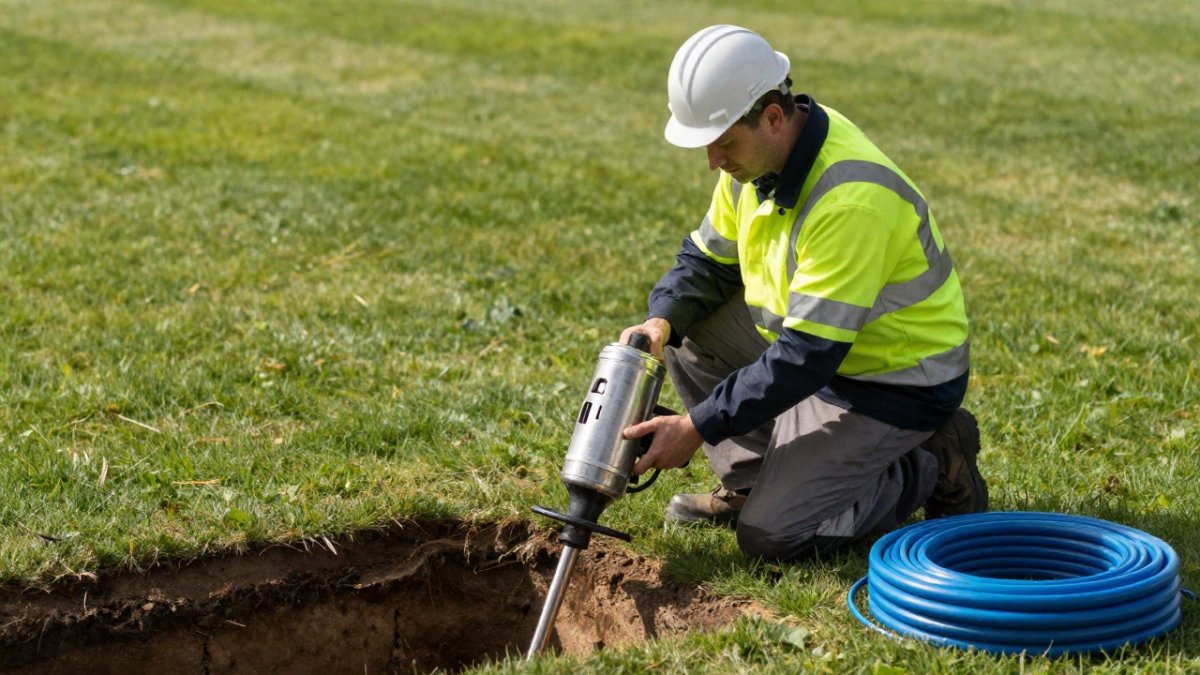
Moling generally suits a straight path from boundary to building, and our engineers will survey your route to confirm whether it is suitable.
For a deeper comparison, see our guide on moling vs traditional excavation.
The Cost to Repair a Leaking Water Pipe Explained
The cost to repair a leaking water pipe depends on several factors, including access, pipe length and ground type.
The main cost drivers are:
Access: a clear garden path is cheaper than a driveway or building foundation.
Pipe length: longer runs need more material and time.
Ground conditions: clay, roots and made-up ground slow the work.
Method: the chosen repair approach affects the overall cost.
For a quote specific to your property, contact External Moling Services Ltd. For a general overview, read our guide on the cost to repair a leaking water pipe.
Safety, Permits and Utility Checks Before Any Excavation
Safety comes before any spade hits the ground. Before excavation, checks for buried services such as gas, electric and telecom lines are essential, as striking a live cable or gas main is dangerous.
Verifying the Repair Worked and Preventing Repeat Leaks
A repair is best confirmed through testing once the work is complete. Pressure testing the repaired pipe and checking for any drop in pressure can help confirm the leak has been sealed. Checking over the following weeks helps confirm nothing was missed.
Preventing repeat leaks comes down to pipe condition, ground movement, water pressure and how the pipe is protected. Older lead or galvanised pipes fail again elsewhere if only one section is patched, because the whole run shares the same age and condition. External Moling Services Ltd offers a 10-year labour guarantee on water main replacements and repairs.
The mechanisms that drive recurrence beneath buildings are worth understanding:
Pipe material: lead and galvanised steel corrode from the inside and become brittle; a patch on one section leaves the rest equally vulnerable.
Corrosion and aggressive ground: some soils and made-up ground attack metal pipes faster, so a repair that does not address the pipe material will fail again.
Ground movement: clay soils shrink and swell with the seasons, and tree roots can shift a pipe until a joint opens. A repair that does not allow for movement can crack again.
Water pressure: sustained high pressure stresses joints and fittings. Fitting a pressure-reducing valve where the mains pressure is excessive protects the whole system, not just the repaired section.
Bedding and protection: a repaired pipe that is not properly bedded and surrounded with suitable material is more likely to be damaged by backfill or future works.
A practical maintenance routine reduces recurrence: note the pipe route and material, check the meter periodically for unexplained creep, fix dripping taps and overflowing cisterns promptly, and have the pipe surveyed again if the water bill climbs without explanation.
When to Book a Trenchless Survey and Get Your Free Quote
Book a survey as soon as you suspect a leak, not after the damage spreads. Early detection can help keep a repair smaller and reduce damage to surrounding areas.
Signs you should call us now:
A water bill that has jumped with no change in use.
Damp patches on floors or low walls.
The sound of running water when all taps are off.
A drop in water pressure at the taps.
Warm spots on a solid floor, which can signal a hot pipe leak.
External Moling Services Ltd has over 20 years of experience as an approved water board company. For no-dig repairs, see our leaking pipe repairs service. Our fully qualified engineers are available 24 hours a day, 365 days a year. We specialise in trenchless moling.
Suspect a leak under your floor or driveway? The longer you wait, the more water damage builds. External Moling Services Ltd offers 24/7 trenchless moling, acoustic leak detection and a 10-year labour guarantee on water main replacements and repairs. Get started with External Moling Services Ltd and fix the leak without digging up your home.
Frequently Asked Questions
Can a leaking water pipe under a concrete floor be repaired without digging it up?
In many cases, yes. Trenchless methods such as moling can let engineers replace a damaged section through small access pits rather than breaking out an entire slab or floor. The method depends on pipe material, diameter, depth and how much space surrounds the pipe. A specialist contractor can advise on whether trenchless repair is suitable for your property.
Who is responsible for a leaking water supply pipe?
Responsibility usually sits with the property owner for the supply pipe running from the boundary stopcock into the building, while the water company maintains the mains and the communication pipe up to the boundary. Water supply pipe responsibility can shift in flats, shared supplies or unusual boundaries, so check your deeds and your water company's guidance. Read your buildings insurance policy terms to see what is covered before assuming a claim will be paid.
How much does it cost to repair a leaking water pipe?
The cost to repair a leaking water pipe depends on the leak location, pipe material, access difficulty, repair duration and whether ground reinstatement is needed. A straightforward internal repair costs far less than a buried pipe beneath a concrete slab or driveway. Because every property differs, contact External Moling Services Ltd for a quote specific to your property before you commit.
How long does it take to repair an underground water pipe?
Repair duration depends on property access, pipe condition and ground conditions, so the timescale for your property will vary. Property access, pipe condition and ground conditions all affect repair duration.



Comments