


Emergency Water Pipe Repair: What to Do Now

What to Do Immediately When a Water Pipe Bursts or Leaks
When a water pipe bursts or leaks badly, the first minutes matter. Your priority is to stop water flowing through the damaged pipe before it causes structural damage or floods neighbouring homes.
The moment you notice a burst pipe, a visible spray, a sudden drop in water pressure, or pooling water, act in this order. First, turn off the water supply to your property. Second, open all cold taps to release remaining pressure. Third, contact an emergency plumber immediately. At External Moling Services Ltd, we operate 24/7 because pipe emergencies don't wait for business hours.
While waiting for the engineer, photograph any visible damage and move furniture away from the affected area. If water is pooling inside, contain it with towels or a wet vacuum. Do not attempt a DIY repair, temporary fixes often fail under pressure and make things worse. A qualified plumber will assess whether the water pipe needs repair, replacement, or temporary stabilisation.
Watch OutIf water is actively spraying or flooding into your property, do not wait for a scheduled appointment. Call emergency services if there is risk of structural collapse or electrical hazard (water near electrics).
How to Shut Off the Water Supply
The internal stopcock is your fastest way to stop water entering your property when a pipe bursts or leaks, and finding it quickly can prevent thousands of pounds in water damage.
Locating Your Internal Stopcock
Your internal stopcock sits where the water main enters your property, usually under the kitchen sink, in a cupboard beneath the stairs, in the utility room, or in the basement. Look for a small oval or rectangular cover in the floor, or a valve protruding from the wall.
The stopcock is a small brass or chrome valve with a handle. Turn it clockwise to shut off water flow, slowly and steadily, forcing it can damage the valve. If the handle is recessed into the ground, you may need an inexpensive stopcock key from a hardware store.
Once the stopcock is off, open all cold taps to release remaining pressure. This prevents further spray from the burst pipe and allows air into the system.
If You Cannot Find or Access the Stopcock
If your internal stopcock is stuck, broken, or you cannot find it quickly, move to your external stopcock. Usually near the property boundary under a small metal cover in the pavement or garden, it controls supply to your entire property and requires a specialist key.
If you cannot access either stopcock, contact your water company's emergency line immediately, they can shut off supply from the street-side main. Provide your address and a clear description of the emergency. Most water companies respond quickly for life-threatening water emergencies.
Pro TipKeep a stopcock key in an accessible drawer near your main stopcock. During an emergency, you won't have time to search for tools. Mark the location clearly so any family member can find it quickly.
Water Pipe Repair Cost: What You Can Expect to Pay
The cost of emergency water pipe repair depends on whether the pipe is your responsibility, the location of the damage, the repair method, and the time of day.
For a visible water pipe under your property, costs vary with access difficulty and whether the pipe can be repaired or must be replaced. Emergency call-outs outside standard business hours (evenings, weekends, bank holidays) typically carry a premium. If the pipe is the water company's responsibility, they usually carry the cost, though determining responsibility can take time.
Trenchless methods like moling cost more upfront than traditional digging but often save money on reinstatement and landscaping. External Moling Services Ltd provides transparent quotations after a site assessment, so you understand the full scope before work begins.
For an accurate quote, contact a qualified emergency plumber with the leak location, property type, and any visible damage. Many providers, including ourselves, offer free initial assessments and a fixed price.
Key TakeawayEmergency water pipe repairs are not one-size-fits-all. Get a quote from a qualified provider before committing to work. Transparent pricing upfront prevents surprises when the invoice arrives.
How Long Does Emergency Water Pipe Repair Take
Duration depends on the pipe's location, the extent of damage, and the repair method.
For an accessible above-ground pipe, a qualified plumber can often finish within 1-3 hours, including locating the fault, shutting off water safely, making the repair, pressure-testing, and restoring supply.
If the pipe is underground or embedded in a wall, repair takes much longer. Traditional excavation can take a full day or more, especially beneath patios or driveways. Trenchless moling is often faster, the pipe is accessed from two points and the damaged section replaced without excavating the entire run, typically in 4-8 hours depending on pipe length and soil conditions.
Response time is critical too. Emergency plumbers aim to arrive quickly for urgent call-outs. External Moling Services Ltd operates 24/7, 365 days a year, so you can access emergency water pipe repair london services at any time, including weekends and bank holidays.
Best ForHomeowners who cannot afford days without water supply or who have extensive gardens they want to protect should ask about trenchless repair methods. These typically complete faster than traditional digging and minimise landscape disruption.
Landlord Responsibility for Water Pipe Repairs
If you rent, responsibility for water pipe repairs typically rests with your landlord, who has a legal duty to keep the property habitable, including the water supply system.
Responsibility depends on where the damage occurs. The landlord covers the water main (the pipe from the street into the property) and all internal pipework within the structure. The tenant is responsible for damage caused by misuse, negligence, or failure to report a known issue promptly.
If you notice a leak or burst pipe, report it to your landlord or managing agent immediately in writing (email is acceptable), and document the date, time, and location with photographs. Your landlord's duty to repair is triggered only once they are aware of the problem.
In emergencies where the leak poses an immediate risk (flooding, electrical hazard, structural damage), you can contact an emergency plumber directly and ask your landlord to reimburse the cost. Keep all receipts and correspondence.
If you own your property, you are responsible for all repairs to the water supply pipe. Check your buildings insurance policy, many policies cover emergency water damage and may contribute toward repair costs, particularly if the damage was sudden and unforeseen.
Trenchless Repair Methods: Minimising Disruption to Your Property
Trenchless repair methods like moling offer a faster, less disruptive alternative to traditional excavation for underground water pipe repair and replacement.
Traditional repair means digging a trench along the entire damaged pipe, excavating gardens, driveways, patios, or landscaping, then reinstating everything afterwards. It is time-consuming, expensive, and leaves your property disrupted for days or weeks.
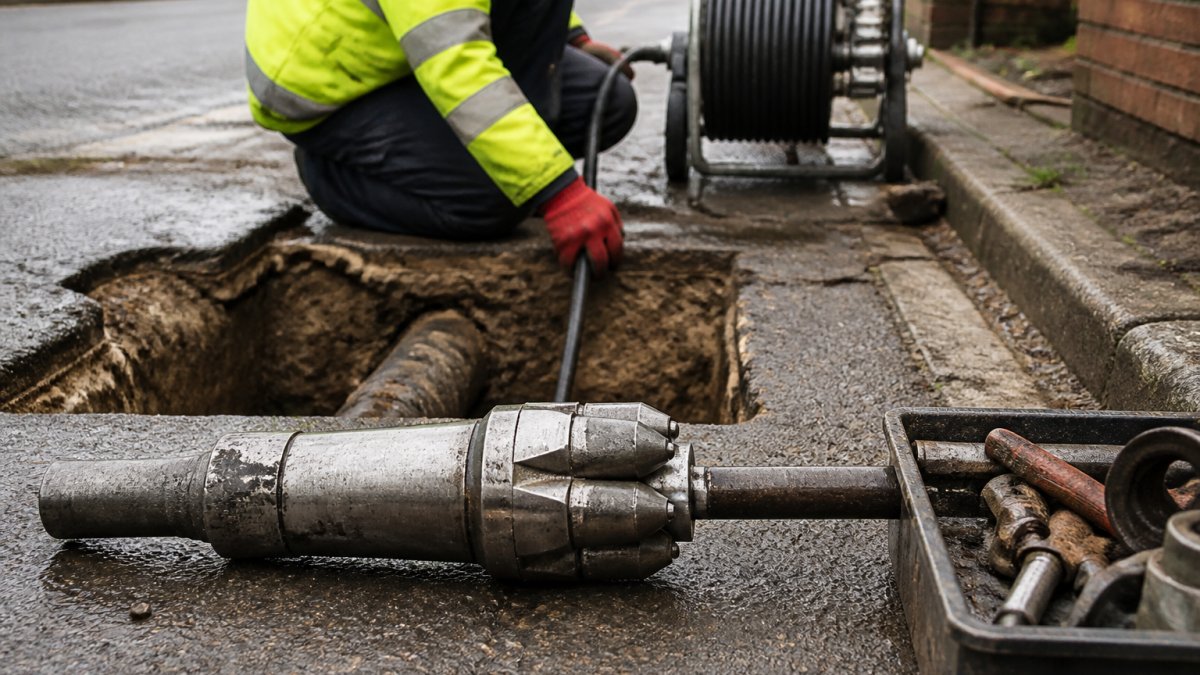
Moling works differently. The damaged pipe is accessed from two small pits at each end of the section being replaced. A specialist tool breaks up the old pipe and compacts the fragments into the surrounding soil, then a new pipe is pulled through the same path, minimal surface disruption, no large trenches, and much faster completion.
External Moling Services Ltd specialises in trenchless moling for water supply pipes across London and Southeast England. Our fully qualified engineers assess your property and determine whether moling suits your pipe type and location.
The trade-off is upfront cost, moling equipment is specialist and requires trained operators. But factoring in reduced reinstatement, faster completion, and avoided landscape damage, the total cost is often comparable to or lower than traditional methods, and you can return to normal use within hours rather than days.
How to Identify Whether the Leak Is Your Responsibility or the Water Company's
Determining who is responsible for a leaking water pipe decides who pays. The boundary of responsibility is the external stopcock at your property boundary.
The water company is responsible for the water main, the large pipe beneath the street and the section from the street to your external stopcock. If the leak is there, they must repair it at no cost to you.
You are responsible for everything from your external stopcock into your property: the internal stopcock, the rising main, and all pipework supplying your taps, showers, and appliances. If the leak is within your property boundary, you pay for the repair.
To identify which side of the stopcock the leak is on, look for pooling water or wet ground. A wet patch in the street or between the pavement and your property boundary is likely the water company's section; a wet patch within your garden or property is your responsibility.
Contact your water company's emergency line and report the location. They will send an engineer to assess whether the leak is on their section; if so, they arrange repair at no cost. If it is your responsibility, they will confirm and you should contact an emergency plumber.
Watch OutDo not assume a leak in your garden is always your responsibility. If the wet patch is near the property boundary or beneath the pavement, the water company may be liable. Always ask them to assess before paying for private repair.
After the Repair: Checking for Water Damage and Next Steps
Once the emergency water pipe repair is complete, check the system for leaks, assess water damage, and plan longer-term prevention.
After supply is restored, run all taps and check water flows normally. Air in the system is normal immediately after repair, run taps for a few minutes until the water runs clear.
Inspect the repair site and surrounding areas for dampness or seepage.
Document the damage with photographs for your insurance claim and contact your buildings or home insurer within your policy's timeframe (usually 30 days). Provide the repair invoice and damage photos.
For prevention, ask your plumber whether your pipe is at risk of similar failure. Older lead pipes, corroded copper, or pipes in aggressive soil are prone to recurring problems.
If you have a water meter, check usage in the weeks after the repair. A sudden spike may indicate a slow leak elsewhere that wasn't visible during the emergency.
Water pipe emergencies demand fast action, but they don't have to leave your property in chaos. Knowing where your stopcock is, understanding who pays for repairs, and choosing a qualified 24/7 emergency plumber makes all the difference.
Frequently Asked Questions
How do I shut off the water if a pipe bursts?
Locate your internal stopcock, usually under the kitchen sink or in a cupboard near the water meter. Turn the valve clockwise until it stops. If you cannot find it, check under the stairs, in the basement, or near the external water supply entry point. If the stopcock is stuck or inaccessible, contact the water company's emergency line immediately. Shutting off the water stops the leak and prevents further water damage while you arrange emergency water pipe repair.
How much does emergency water pipe repair cost?
Water pipe repair costs depend on the pipe's location, the damage type, whether replacement or repair is needed, and your property's age and construction. Lead pipes, Victorian properties, and trenchless methods (which avoid digging) may affect pricing. For an accurate quote based on your specific situation, contact a qualified plumber or specialist engineer. Many providers offer free initial assessments to determine the exact scope of work and provide transparent pricing before work begins.
Who is responsible for repairing a leaking water pipe in a rented property?
In rental properties, landlords are legally responsible for maintaining the water supply pipe from the water company's boundary to the property. This includes emergency repairs if the pipe bursts or leaks. Tenants should report the issue immediately to their landlord in writing. Landlords must arrange repairs promptly to avoid water damage and comply with habitability standards. If a landlord fails to act, tenants may contact their local authority or seek legal advice.
How long does emergency water pipe repair take?
Response time varies: emergency plumbers typically arrive within 1-2 hours for urgent call-outs. The actual repair duration depends on the pipe's location, damage extent, and repair method. Simple repairs may take 2-4 hours; trenchless methods can often be completed in a single day without excavation. Complex replacements or work on Victorian lead pipes may require longer. Always confirm timescales with your engineer when they arrive, as site conditions can affect the schedule.


Comments