


How to Understand What a Water Pipe Survey Costs
Last Updated: October 26, 2026
Quick Summary
A water pipe survey typically costs £250 to £1,500 or more, depending on the scenario. A small flat with a short supply run and clear access sits at £250-£400, a standard house at £350-£600, and a Victorian terrace with lead pipework at £500-£900. Leak detection adds £150-£400 on top of the survey.
The biggest price driver is whether the survey covers the supply pipe, drainage, or both.
A pre-purchase survey with a solicitor-grade report typically costs £400-£750.
Ask whether the quote includes locating the leak to a diggable point, not just confirming one exists.
A quote should state scope, access, report format, VAT and exclusions in writing.
Shared or boundary pipework adds cost because tracing may extend beyond your boundary.
Table of Contents
What a Water Pipe Survey Covers and What Drives the Cost
Water supply pipe survey versus drainage survey: two different jobs
CCTV Drain Survey Cost and How It Differs from Supply Pipe Work
Water Supply Pipe Inspection: What a Homebuyer Survey Includes
Water Pipe Leak Detection Cost: When Tracing Adds to the Bill
How to Read a Water Pipe Survey Quote and Spot Exclusions
Cost Scenarios by Property Type and Survey Purpose
Making Sense of Findings and Your Next Repair Decision
Get Your Free Quote from External Moling Services Ltd
Frequently Asked Questions
What a Water Pipe Survey Covers and What Drives the Cost
Working out how much does a water pipe survey cost starts with one question: which pipe are you surveying? A water pipe survey is a paid inspection of the buried pipe that carries drinking water into a property, using cameras, acoustic listening equipment and trace-and-locate tools to find leaks, cracks and corrosion without digging. The single biggest driver of price is not property size. It is whether the survey covers the supply pipe, the drainage system, or both.
Supply pipe work usually costs more per metre than a straightforward camera drain inspection, because the pipe is smaller, deeper in places, and harder to trace. A survey on a long garden run with no visible stop valve takes longer than one on a short drive. Access matters too: a clear manhole and an accessible internal stopcock cut labour time, while shared or boundary pipework adds complexity.
Water supply pipe survey versus drainage survey: two different jobs
A water supply pipe survey traces the incoming mains pipe, checks for leaks and maps its route. A drainage survey inspects the soil and waste pipes carrying water away, usually with a push-rod CCTV camera. They use different kit, different engineers and different reports. Confusing the two is the most common reason quotes come back higher than expected.
CCTV Drain Survey Cost and How It Differs from Supply Pipe Work
A CCTV drain survey cost is quoted on a different basis to supply pipe work, and mixing the two up distorts your budget. Drain surveys are usually priced per camera run or per property, while supply pipe surveys are priced on access, length and tracing difficulty. A basic camera drain inspection covers one or two runs with a short written summary. A full drain survey includes a report with pipe mapping, defect coding and recommendations, and that report is what homebuyers and solicitors actually rely on.
Supply pipe surveys rarely involve a push-rod camera in the same way. Engineers use acoustic detection, tracer gas or a camera on a reel to inspect the pipe internally where access allows. If a supplier quotes you a "drain survey" price for a leaking supply pipe, ask what equipment is included before you accept.
Water Supply Pipe Inspection: What a Homebuyer Survey Includes
A water supply pipe inspection for a homebuyer typically includes a trace of the incoming main from the boundary stop valve to the internal stopcock, a leak check along its route using acoustic listening equipment, a condition assessment of visible pipework, and a written report with photographs and a pipe map.

For a pre-purchase inspection, the report matters more than the camera footage. A competent report should contain:
Pipe route map showing the supply pipe's path from the boundary to the property, with depth notes where traceable.
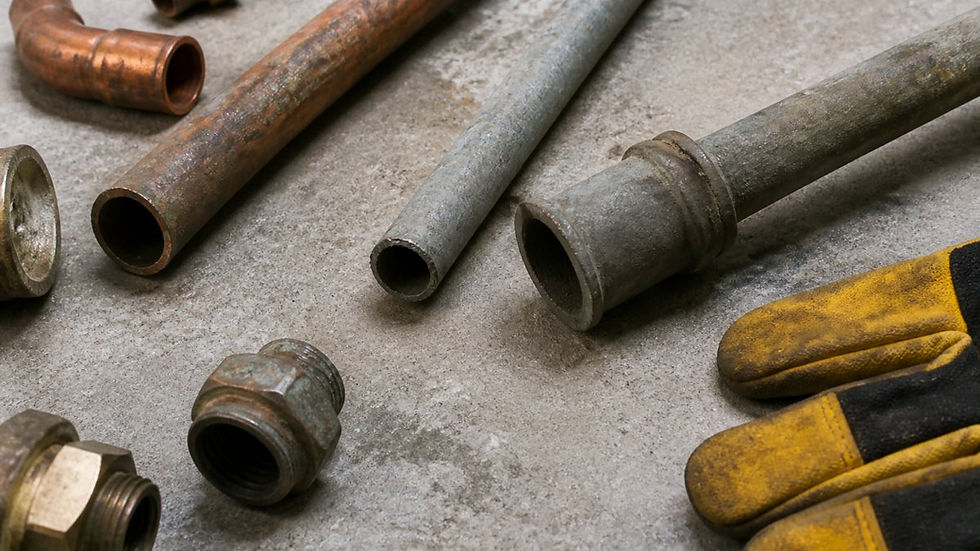
Pipe material and diameter, lead, copper, or MDPE, because material drives both repair method and cost.
Defect descriptions in plain English, with severity ratings and photographs of any corrosion, leaks, or joint failures.
Access limitations stated explicitly: which sections could not be inspected and why (for example, a paved driveway over the pipe run or a missing internal stopcock).
Recommendations separating immediate action from monitoring.
A report that says "no defects found" without stating what was inspected is close to worthless. Ask the surveyor before booking whether the report will include a pipe map and defect coding, and whether the price covers a trace of the full supply run or only a spot check at the stopcock.
Homebuyers should also understand where responsibility sits. The supply pipe is generally the homeowner's responsibility from the boundary stop valve (often at the property boundary or pavement) up to the internal stopcock. The water company is usually responsible for the communication pipe from the mains to the boundary.
Pro Tip If you are buying a property and the survey is a condition of exchange, ask the surveyor to confirm in writing that the report is suitable for a solicitor's review. A verbal summary or a one-page letter is not the same product as a full mapped report, and the price difference reflects that.
A pre-purchase supply pipe survey is not the same as a standard drainage survey that a solicitor may request. The drainage survey covers the soil and waste pipes; the supply pipe survey covers the incoming mains. Some buyers need both, and commissioning them separately usually costs more than asking one contractor to quote for both at the same visit.
Water Pipe Leak Detection Cost: When Tracing Adds to the Bill
Water pipe leak detection cost sits on top of a standard survey when the leak is not obvious. Acoustic detection, tracer gas and moisture mapping all add time and equipment, so expect the quote to rise. The alternative, excavating to find the leak by eye, usually costs more in the end.
Watch out: a quote that covers "detection" but not "tracing" can leave you paying twice. Ask whether the price includes locating the leak to a diggable point, or only confirming that one exists. If you already know the leak needs a repair, our leaking pipe repairs service handles the fix without digging up your driveway.
How to Read a Water Pipe Survey Quote and Spot Exclusions
A water pipe survey quote should state scope, access requirements, report format, VAT and exclusions in writing. If any of those are missing, ask before you book. A fixed price is only fixed for the scope described.
Quote element | What to check | Red flag if missing |
Scope | Supply pipe, drainage, or both | Vague "survey" wording |
Access | Manholes, stopcock, garden route | Assumes easy access |
Report | Photos, pipe map, defect notes | Verbal summary only |
VAT | Included or added | Silent on tax |
Exclusions | Repair, excavation, permits | No exclusions listed |
Call-out | Standard or emergency rate | Emergency rate hidden |
The Consumer Rights Act 2015 requires services to be carried out with reasonable care and skill, so a written scope protects you if the work falls short. Compare packages like for like: a cheap quote with no report is not the same product as a full survey.
Cost Scenarios by Property Type and Survey Purpose
Pricing depends on the scenario, not a single headline figure. The table below sets out how the main variables combine in practice. Figures are indicative ranges for a supply pipe survey; drainage surveys are quoted separately and usually priced per camera run.
Scenario | Typical scope | What drives the price | Indicative range (GBP) |
Small flat, short supply run, clear access | Trace from boundary stop valve to internal stopcock, acoustic leak check, written report with photos | Short pipe length, easy access, no excavation | £250-£400 |
Standard house, typical garden run | Full trace, leak detection along route, pipe map, defect report | Garden length, presence of visible stop valve, pipe material | £350-£600 |
Victorian terrace, original lead pipework, shared boundary | Trace with tracer gas or camera where access allows, condition assessment of lead run, boundary responsibility review | Lead pipe, shared pipework, access constraints, tracing difficulty | £500-£900 |
Large property or commercial premises with multiple units | Multi-run trace, plant room inspection, detailed mapping and defect schedule | Number of units, pipe complexity, report detail for solicitor or insurer | £800-£1,500+ |
Pre-purchase survey with solicitor-grade report | Full trace, mapped report, defect coding, access limitations stated | Report depth, need for solicitor-ready documentation | £400-£750 |
Leak detection add-on (acoustic, tracer gas, moisture mapping) | Confirming and locating a suspected leak to a diggable point | Detection method, access, whether tracing is included | £150-£400 on top of survey |
These ranges are indicative only. The only reliable figure is the one attached to your property after a site assessment.
Shared and boundary pipes. A common source of unexpected cost is shared pipework. If your supply pipe serves more than one property, or crosses a boundary, responsibility can be split between freeholders or covered by an agreement.
Survey purpose changes the report, not just the price. A quick leak check for a homeowner who suspects a leak needs detection and a diggable location. A pre-purchase survey needs a mapped report that a solicitor can rely on. An insurance claim may need defect coding and photographs to a specific standard.
For replacement budgeting after a survey, a guide to trenchless pipe replacement costs sets out what to plan for.
Making Sense of Findings and Your Next Repair Decision
Survey findings only matter if they lead to a clear decision. Minor surface corrosion on a mapped pipe may need monitoring, not replacement. A confirmed leak on a lead supply pipe usually means repair or replacement, and the method depends on access and ground conditions. Understanding trenchless water pipe repair and why cost matters helps you weigh options before committing, and a comparison of moling versus traditional excavation explains which suits different properties.
A common mistake is commissioning a survey and then choosing a repair method without reading the report properly. The report tells you pipe material, depth and condition, and that drives the method. Ask the surveyor to explain findings in plain terms before you decide.
Get Your Free Quote from External Moling Services Ltd
Survey costs vary, and the only reliable figure is the one attached to your property. External Moling Services Ltd has over 20 years of experience as an approved water board company, with fully qualified engineers available 24 hours a day, 365 days a year. Every water main replacement and repair we carry out is backed by a 10-year labour guarantee, and our trenchless moling method keeps disruption to your garden and driveway to a minimum.
Get started with External Moling Services Ltd and get a clear, fixed quote for your water supply pipe needs. Visit our water supply services page to request your free quote.
Frequently Asked Questions
Is a water pipe survey different from a drain survey?
Yes. A water pipe survey examines the supply pipe that brings fresh water into the property, while a drain survey uses CCTV to inspect waste and surface water drainage. The two use different access points, equipment and reporting. A water pipe survey quote should state clearly which pipework is being inspected, because a drainage survey will not tell you about a leaking supply pipe and vice versa.
What is included in a water pipe survey?
A standard water supply pipe inspection typically covers a visual check of internal pipework and visible sections, a trace of the supply route, and a written report with findings and recommendations. A full survey may add pressure testing, leak detection and pipe mapping. Ask for the scope in writing, including whether the report covers shared or boundary pipes and whether VAT and any additional manhole access are included.
How much does a CCTV drain survey cost compared with a water pipe survey?
CCTV drain survey cost and water pipe survey cost are priced separately because they inspect different systems. Drain surveys are usually quoted as a fixed price per property or per run, while supply pipe surveys vary with access, pipe length and whether leak detection is needed. Always compare quotes on the same scope, and confirm whether the figure includes VAT, a written report and any follow-up visit.
Can a survey find a leak in a water supply pipe?
Yes. A water pipe leak detection cost is often added to a standard survey when the leak is not visible. Engineers use acoustic listening, tracer gas or pressure testing to narrow down the location before any excavation. Finding the leak accurately first reduces the risk of digging up the wrong area, which is why a combined inspection and detection quote can work out cheaper than separate visits.
Get Your Free Quote
Add externalmolingservicesltd.co.uk as a preferred source on Google →


Comments